I was in Wuhu, China, for business and wanted to find a good coffee shop. I used Amap, which is the map app I normally use when I’m in China.
I usually look at the rating first and then check the photos. With coffee shops, one thing I look at is the foam. If the surface looks silky and you can see good microfoam, it usually means they care about how the coffee is made.
That’s how I found Cure Coffee in the Fuchunyuan residential area.
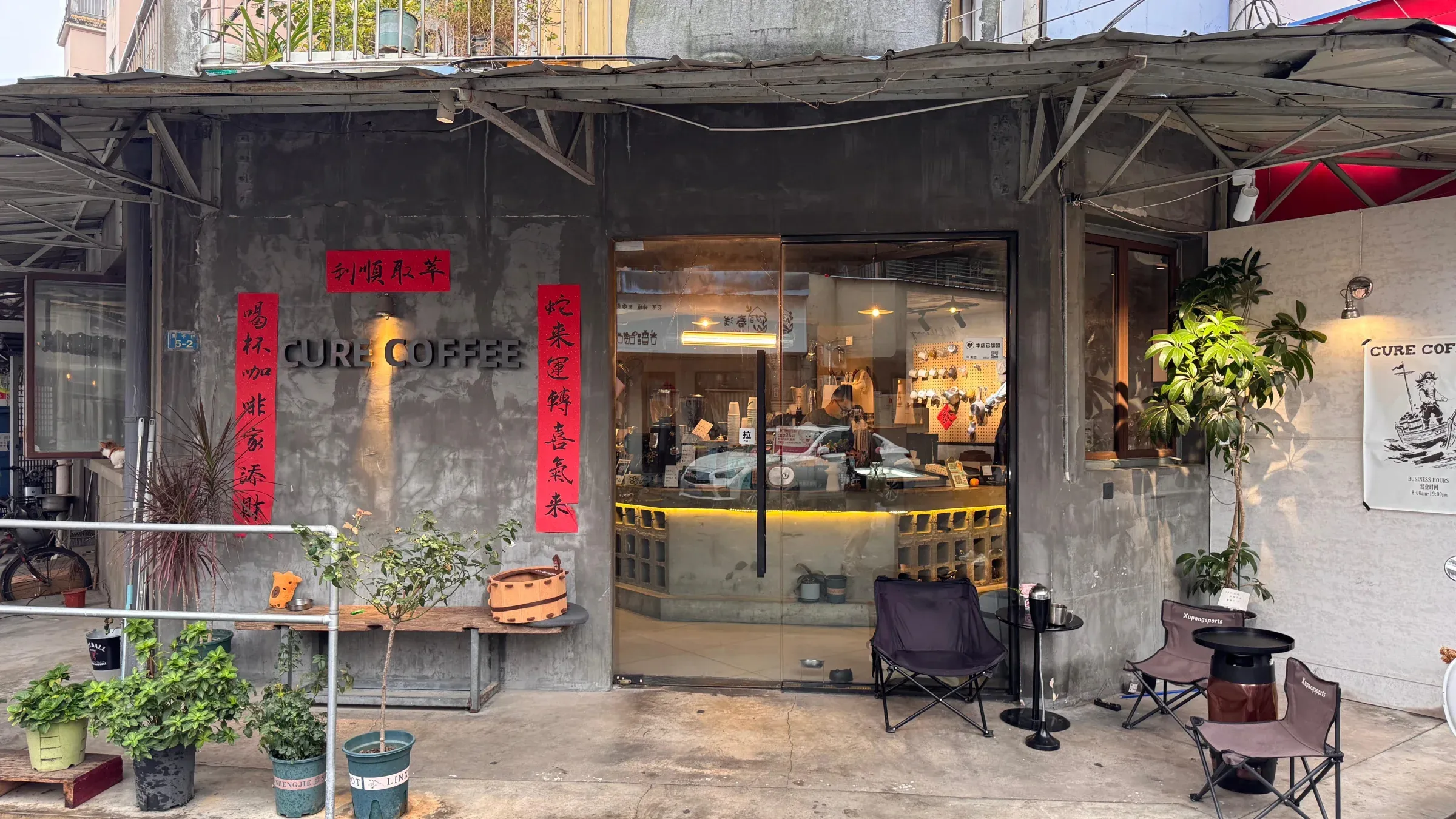
Cure Coffee was open until 7 p.m. That is one of the things I love about China. Even later in the day, there are still places open and people out. It often feels like the cities never sleep.
I also liked the red posters around the entrance. I can’t read Chinese, so I used Google Translate. The one above the sign says, roughly, “May the extraction go smoothly.” The posters on the sides say, “When the Snake comes, fortune turns and happiness arrives,” and “Have a cup of coffee and bring wealth to the family.”
You see positive phrases like these a lot in China: good wishes on walls and doors, and positive words in shop names. I like seeing that everywhere.
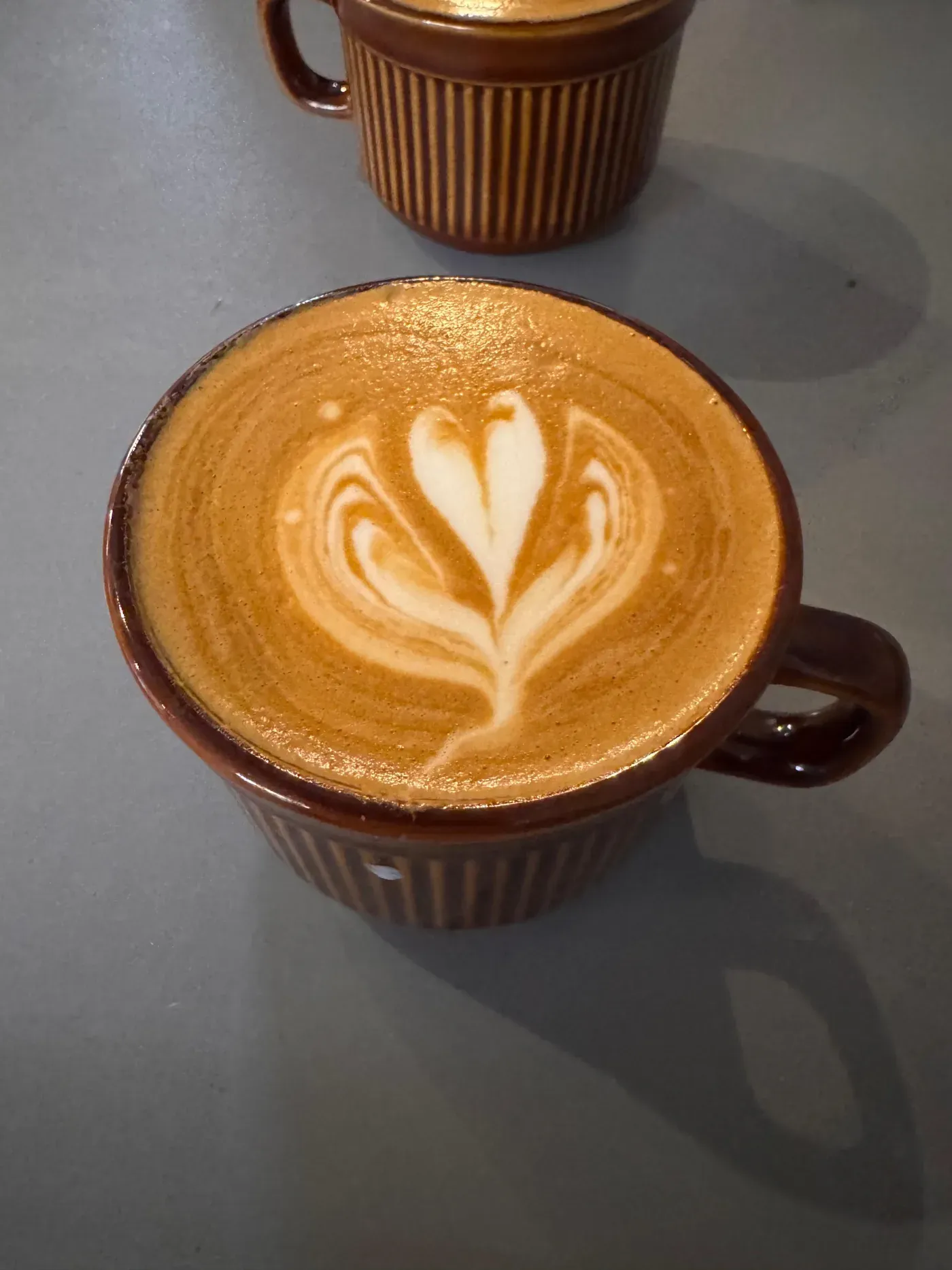
The cappuccino
The cappuccino I had there was the best one I’ve had in recent memory. Everything was right: the flavor, the foam, the temperature, and the texture.
Even the cup added to the experience. It was a ribbed brown glazed stoneware mug with a retro look. The brown color worked perfectly with the coffee and the café. I’d love to find one like it for myself.
I also noticed that the size of the opening helped the layer of foam last all the way to the end. Cup opening size is another thing I’ve started paying attention to, because it seems to affect how the foam sits and how long it lasts.
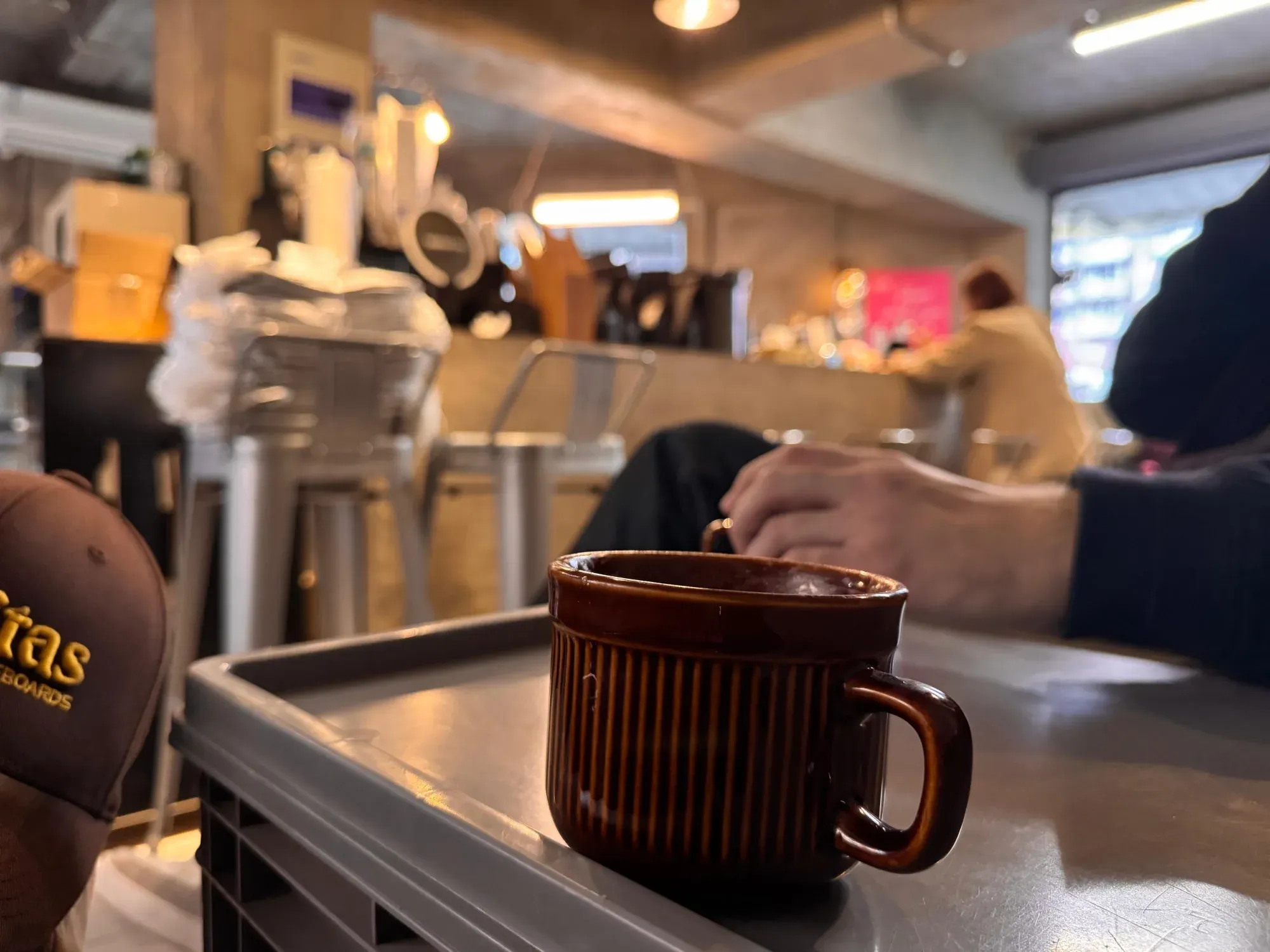
As far as I remember, the cappuccino cost 20 or 22 RMB. The flavor was very chocolatey and balanced. The first sip through the top layer of foam was intense but still balanced, and the rest of the cup stayed that way. The foam lasted throughout, which gave the coffee a full-bodied texture all the way to the end.
I brewed the beans at home later. The coffee was intense there too, but I couldn’t get the foam quite the same. Maybe it is my technique.
It was just perfect.
The interior
The interior was one of my favorite things about the place. I still don’t know the exact name for the style.
The walls, ceiling, and counter were unfinished concrete. The electrical pipes were left exposed, and some of the lights looked like workshop lights. There were galvanized metal stools at the counter, grey utility shelves, and a plywood pegboard with ceramic cups and metal camping mugs hanging from it.
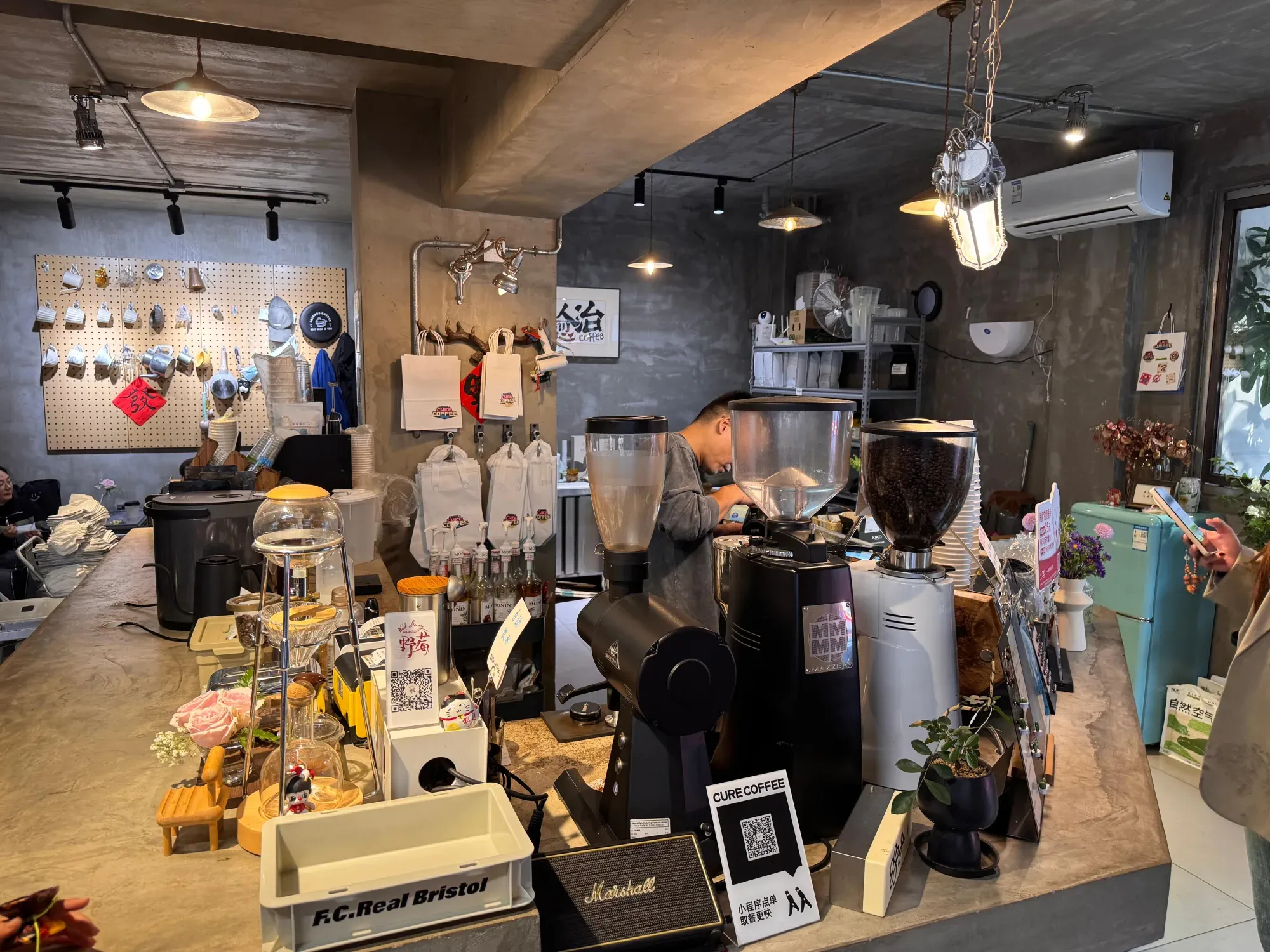
They also had a small pale-turquoise refrigerator with a retro design. Outside, the seating was made up of folding camping chairs and small black tables. I sat in one of the camping chairs.
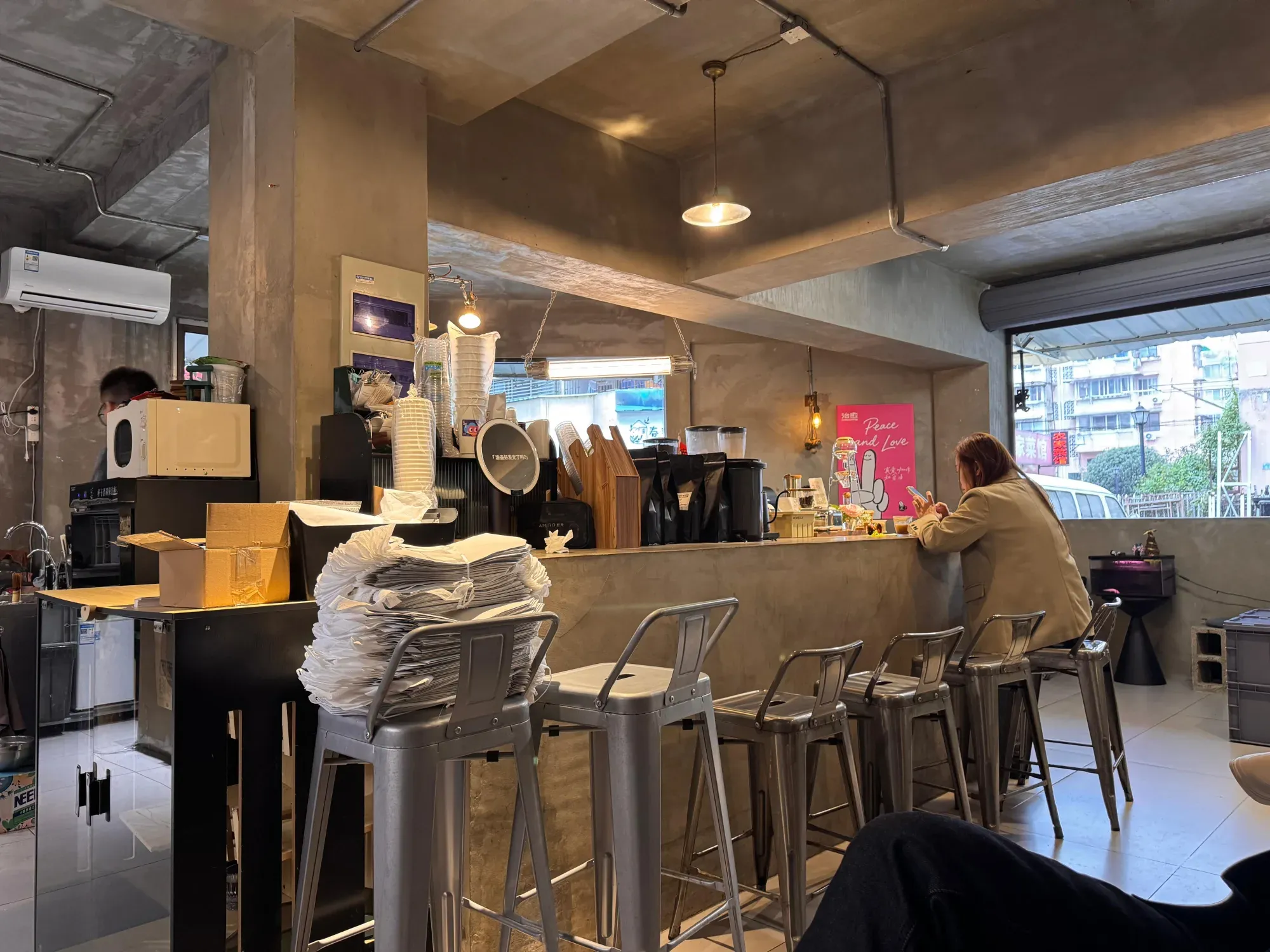
It reminded me of a post-apocalyptic movie where people don’t have access to newly manufactured products, so they use whatever is already available. I mean that in a good way. The café felt raw, simple, and practical.
Maybe salvage-industrial or improvised utilitarian is the best name for it. Whatever it is called, I liked it.
Back the next day
I sat inside during my first visit. Since I loved their coffee, I went there again the next day.
This time, I sat outside on one of the camping chairs. Their cat kept coming over to me to be petted.
The café is on a street that looks a little like a back road or alley. That isn’t unusual in Chinese cities. There can be restaurants, cafés, and other interesting places hidden inside residential streets that you would probably never find just by passing through.
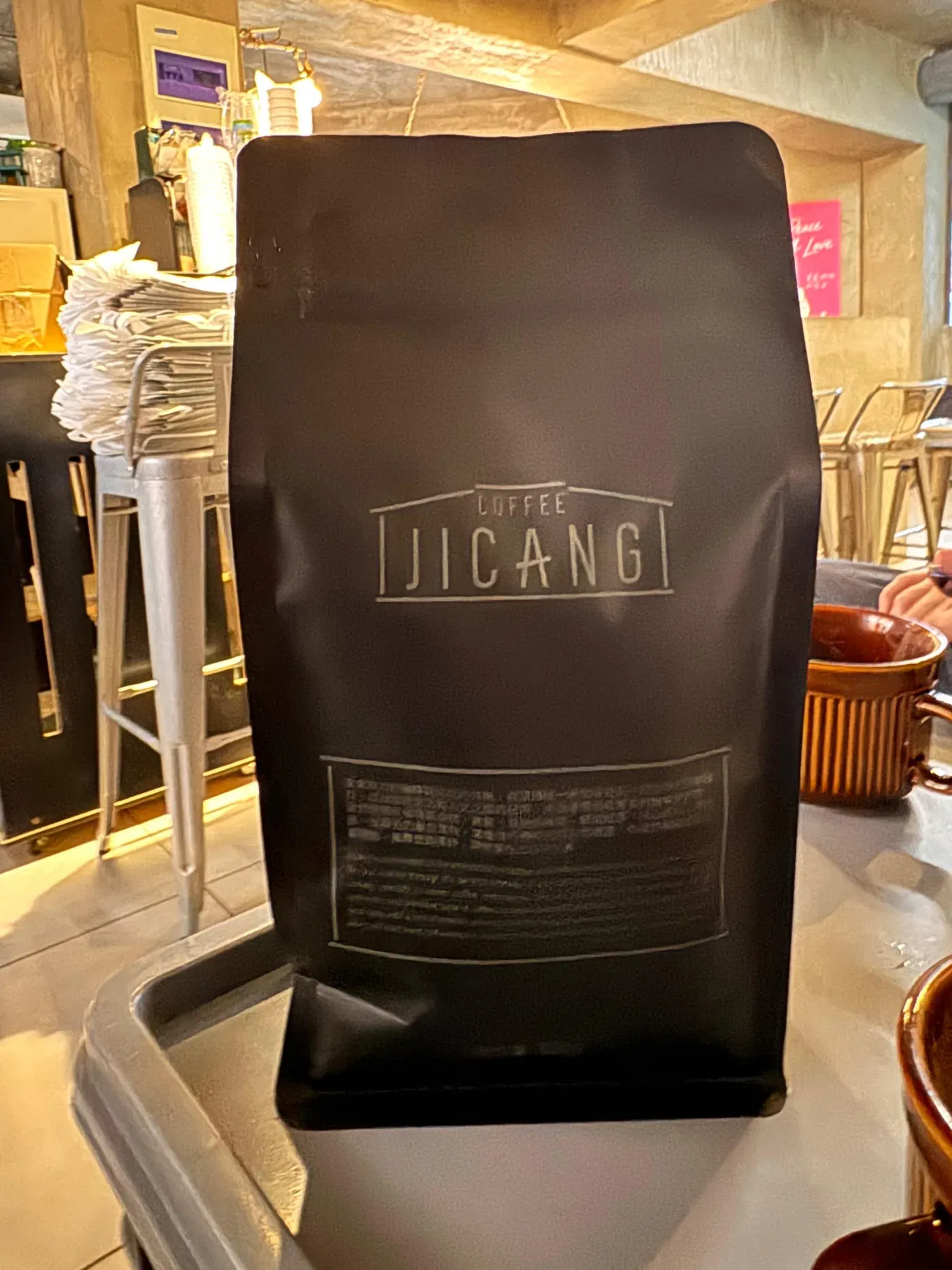
Cure Coffee was one of those places for me. I also bought a large bag of coffee beans from them and took it home with me.
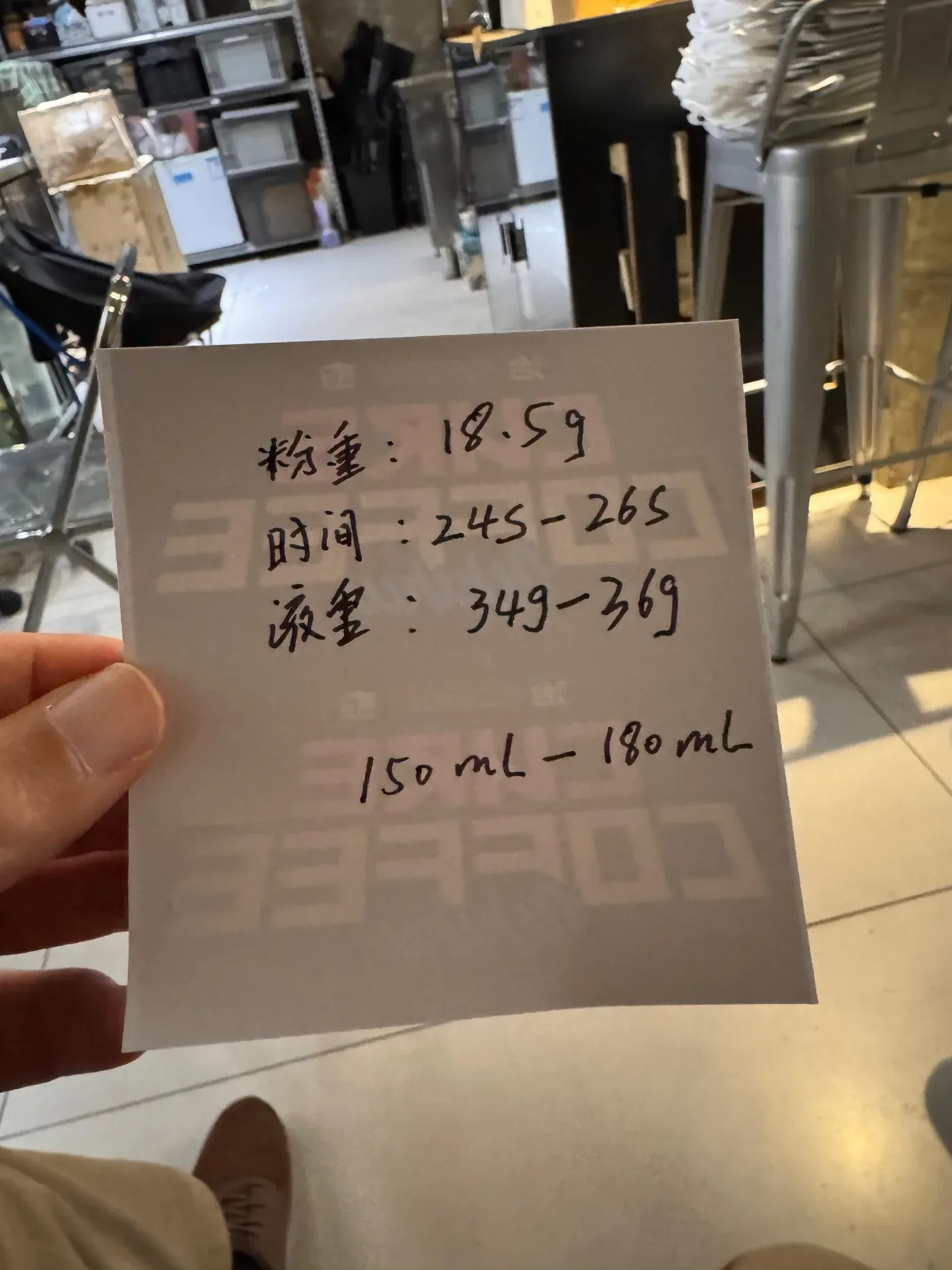
When I buy beans from a café, I usually ask for the recipe. It gives me a helpful starting point and some hope that I might be able to get close to the flavor I had there. I ask for the dose in, coffee out, extraction time, how much milk they use, and whether the cup I had was made with a single or double shot.
If they aren’t busy, I’ll ask for more details, including the water temperature. I’ve found that they often don’t know the temperature right away and have to check with the manager.
For sure, it’s my favourite coffee in Wuhu.